Popular Posts

Monday, January 6, 2014

A Chasing After the Wind: The Things I Always Knew, But Found a Way to Justify About Poker


During college, the poker boom swept me up with countless others who were captivated by the film Rounders and ESPN’s World Series of Poker footage. At the time, the game of Texas Hold ‘Em—though previously foreign to most people—gained traction through the colorful characters who played it on television, and through the seven-figure purse for the world champion. When the 33-year-old accountant Chris Moneymaker (a rank amateur) beat Sam Farha—a seasoned professional whom I incidentally met years later at a Houston restaurant—millions of people shared the same reaction: “I can do this, too.” This notion, along with television’s successful romanticizing of the American pastime, produced an obsession I’m ashamed to recall.

After it became obvious ***SPOILER ALERT*** that I was never going to play in the NBA, I sought a competitive outlet elsewhere.  Poker appealed to me instantly. In lieu of besting people physically, perhaps I could do so mentally?[i] In making the transition, I quickly discerned a key difference between athletic forms of competition and sloth-like, degenerate forms of competition.  Money. When it is on the line, many people lose their minds. This is particularly the case when the game displays an utter indifference to your plight and whatever statistical advantage you may have held when the money went into the middle. 

This is not to say that I arrived at some specious conclusion that the game does not favor the most skilled, or that many people—undoubtedly my intellectual superiors as far as the game is concerned, and very likely in other arenas as well—do not enjoy a profitable living from their abilities.[ii] Merely approaching that level of prowess is about as easy as sneezing with your eyes open, though. To adopt the mindset held by most professionals of this sedentary “sport,” you basically need to shed as much of your humanity as possible. What do I mean by that? You’re supposed to feign—and ultimately condition yourself to adopt—indifference to the result of any given hand and content yourself with the knowledge that you made the correct play (if that was indeed the case). It’s a bit like telling a bespectacled adolescent that he should feel good about being on the receiving end of a swirly because he had the moral high ground in a spat with the school bully. The idea of justice, in other words, needs to be entirely discarded.  As poker pro Phil Laak once said, “There is no ‘deserves’ in poker.”

Rationally, though, the desired stance is beyond reproach: If you’re a more skilled player than your peers, losing one big hand should not raise your blood pressure[iii]—you want people to routinely get all of their money in the middle against you when the numbers are in your favor. You should be willing to take AceKing (a 3:2 favorite, also known as a landslide in poker) against KingJack forever and ever, amen. You should inwardly brim with delight—but not outwardly, remembering that you’re striving for the visage and emotional capacity of Tim Duncan—when you get it in with queens (4:1) against jacks. When you lose in that first scenario, something that will occur four times out of ten, frustration is not the correct response because it is a results-oriented reaction. I say all of this to really say that poker requires a tremendous, almost inhuman capacity to take a beating and blithely move on as if merely dealing with a case of bedhead. Many players, no matter how long they play or how hard they try to purge their emotions like the zombie swine-flu, cannot shake the residue, which—for many of us—lingers and often causes ongoing damage[iv]. Poker players call this human flaw tilt[v], and they examine your response to devastation with a Celestron LCD Deluxe in hopes of exploiting you.

Even if you manage to cull your emotions, become a math savant, and establish a lasting disregard for other human life, the outward appearance needed to be a bona fide poker pro may present other issues. That is, it may present issues if you don’t normally wear sunglasses indoors, disregard personal hygiene for days at a time, and generally present yourself as the world’s biggest douchebag. 
If you find that a dashing look, take up poker. And maybe grow a chinstrap beard.

Two things[vi] ultimately drove me from pursuing a game at which I became fairly adept over time. First is the amount of time and energy one must devote to becoming legitimately good at the game. Josh Arieh, best known for his third place finish in the main event of the 2004 World Series of Poker, recently captured my point perfectly: “Poker has just evolved to a spot where you have to play really, really good to make money, and I don’t.” Reading these words from a poker pro—winner of two WSOP bracelets—certainly cast my own modest chip-flinging endeavors in a rather unflattering light. Moreover, in terms of time spent and lost, I gradually became aware of how many things fell by the wayside as I cultivated a deeper understanding of Stack to Pot Ratio. Like anything else, poker requires practice in order to obtain skill, and any aspiring professional spends incalculable time merely studying the game[vii], to say nothing of actually playing it[viii]. There’s simply too much else I want to do with this life.

Secondly, and most importantly, is the premise and goal of poker. In the opening moments of the iconic film Rounders, Matt Damon’s narrative memorably begins with the words, “If you can’t spot the sucker in your first half hour at the table, you are the sucker.” Poker, while an incredibly elaborate chess-match of mental and psychological acumen, is the only competition in which other participants are routinely characterized and mentally catalogued in pejorative terms.[ix]. It’s also one of the very few endeavors in which your success arrives directly at the expense of someone else. Your glee occurs simultaneously with someone else’s despondency. I’ll never forget the words of yet another poker pro named Phil[x], who said that “The goal is to find the weakest person at the table and brutalize them over and over and over again.”  

Even when I played among friends in a relatively friendly home game, I remember being so intent on mentally accessing everything I knew about the game and my opponents that I viewed the social component of the evening as wholly ancillary. I not only wanted to win, but for my opponents to begrudgingly concede to my superiority. And though it upset me at the time, a friend of mine once unintentionally offered up a lucid commentary of me after someone else at the table had complimented my poker play. “Yeah, and Brandon’s got QUITE the personality,” he said with every ounce of sarcasm he possessed. I later realized that the comment should have bothered me for completely different reasons that it did in the initial moments after its utterance.

While it’s certainly possible to treat the game recreationally and socially, I have seen an untold number of friends, casual acquaintances, and complete strangers waste considerable time and energy in an abject attempt to become better than everyone at a game of cards—or simply good enough to drastically alter their financial realities. Unfortunately, I was among this lot. In fact, the closest I've ever been treated to an intervention occurred during college as a result of just how thoroughly immersed—friendships and academics be damned—I was in Texas Hold ‘Em. My devotion to becoming a skilled poker player adversely affected my college grades, created rifts in my relationships[xi], and absolutely brought out the worst of my personality. I have said things to friends and strangers at a poker table that I never considered or desired to say to anyone on a basketball court, where I spent roughly 83% of my waking hours as an adolescent. The game provides endless opportunities to exercise your mind, but—for me, at least—the cost outweighed the benefits. I can find cerebral stimulation elsewhere.  And even though I sort of enjoy the thought of playing a good-natured game with friends in the future, I would much rather shoot hoops with them.


[i] Incidentally, this is the overarching appeal to Fantasy Football.
[ii] Although it should be noted that Tiger Woods would beat any professional poker player 100/100 times in 9 holes of golf, whereas the best poker player in the world would beat Tiger Woods far less frequently in a heads-up match of poker.
[iii] Rather, it should not create a dent in your cyborg armor.
[iv] Like banishing Carol from the prison and failing to perceive the real culprit: the budding sociopath Lizzie.
[v] The namesake of a comically stupid television show that aired sometime amid the poker boom.
[vi] Three if you count my abysmal failure to adhere to the aforementioned wardrobe standard.
[vii] If you need some examples, simply Google “Texas Hold Em” resources. You’ll find innumerable books, instructional videos, articles, and interviews.
[viii] A person could watch the extended version of the Lord of the Rings trilogy in the time devoted to a standard session of poker.
[ix] Special thanks to Phil Hellmuth Jr. for his indelible role in sanctioning this sort of behavior as somehow normal or acceptable.
[x] Gordon, as it were.
[xi] Likely some of which I’m not even aware. 

Wednesday, August 21, 2013

The Pickup Player/Coach: Why Your Friends Secretly Hate You


Preface: Pickup basketball should be understood as an event among participants who are not playing with high school/college teammates. When I was a sophomore in high school, I accepted that a senior—by virtue of his advanced position on both the social strata and team—could verbally abuse me with impunity during a pickup game. In the absence of these power hierarchies, pickup basketball consists of friends or even complete strangers engaging in games that, by definition, do not count for anything.

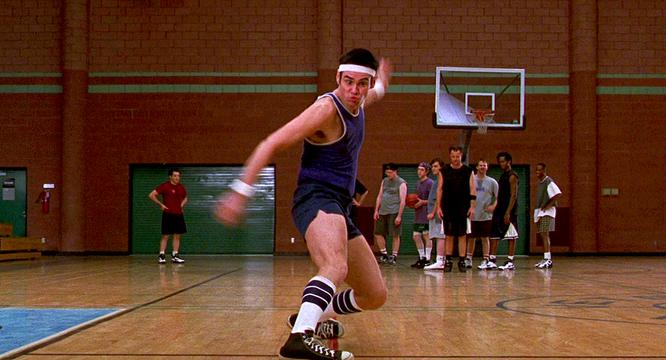
Today, I stumbled upon this video, which aptly characterizes the various pickup basketball archetypes.  Only one of these stereotypical (and very real) participants has the power to reduce the joy I can experience while playing pickup basketball, and inspires me to seek another group of amateur players more aware that they are amateurs. This basketball zealot is known as the Pickup Player/Coach, or PPC for short.

The PPC…

  • Displays the most enthusiasm, outward determination, and emotional investment on the outcome of each contest
  • Is the only person on the court ever doing these things simultaneously: 1) pointing his finger, 2) speaking, and 3) dribbling the ball.


  • Thinks he knows more about basketball than you do
  • Either a) suffers from a lack of self-awareness or b) believes that the unwritten auspices of Competition and Masculinity somehow sanction—demand, even—his behavior
  • Is rarely, if ever, the best player on the court. This may strike those unfamiliar with pickup basketball as an apparent irony, but is unsurprising for the reasons I’ll attempt to articulate later.

It’s important to note that not all verbal utterances make one a player/coach. Even strangers at the rec. center encourage one another after an ill-fated crossover dribble or compliment a nifty assist. Critical remarks, many of which begin with “You gotta,” and all of which are spoken from the mindset that a) the outcome of the game matters[1] and b) people profit from the advice given to them, are those that distinguish the PPC from his socially adjusted teammates.


“You gotta make him go left, man.”

“You gotta cut to the basket there! You woulda had a layup!” 

"You gotta spike those, Focker!"


The Pickup Player/Coach is essentially a thirty-three-year-old Aaron Craft, without all of the media adulation heaped so lavishly and often undeservedly upon all semi-skilled white college basketball players. If forced to describe his game, the words “fundamentally sound” would spill from your mouth as thoughtlessly and automatically as you’d describe a fresh cup of joe as “hot.” 

If you’re a PPC, your friends may not hate you as a person, but I can virtually guarantee that they hate you within the context of pickup basketball and hope to God that they don’t have to play on your team. I would rather play alongside Volume Shooter Who Far Overestimates His Scoring Ability than a PPC—even if that means my only scoring opportunities avail themselves through put-backs and fast breaks. If you chide a teammate for poor help defense, you are a PPC, and everyone hates you more than the black hole with a Kobe complex. If you so much as utter the words “box out” during a pickup game, everyone should hate you, and they likely do.

“But Brandon, you should cut this guy some slack. He is just trying to do his best, goshdarnit. Don’t hate on his passion!”

Here’s my response: Imagine, if you will, another hobby you practice in which someone attempts to instruct you on how to properly enjoy yourself. If you produce an activity that does not involve a personal trainer, I’m impressed.


Now, that thought exercise may not be entirely fair because basketball—unlike other pastimes you could mention—is both competitive in nature and a team sport. Perhaps surprisingly, the player/coach may not necessarily be the same person to criticize an opponent’s river call in Texas Hold ’Em[2] or tell his spouse that she sucks as a Taboo partner. His competitive streak on the basketball court, blessedly, does not always find expression in every other type of game he plays. However, the player/coach is—in most, if not all cases—a former high school point guard whose career met its ceiling when his floor-slapping, screen-setting acumen, and ability to win sprints in practice did not translate to scholarship offers from John Calipari, Roy Williams, and Bill Self. 

As such, pickup basketball triggers a largely lost, though desperately nurtured, desire to be viewed as a hoops success and, perhaps even more importantly, as a leader.  And after high school—sometimes college, though most PPCs weren’t talented or genetically blessed enough for this level[3]—there are basically only two avenues affording the PPC to masquerade as the leader he so clearly and desperately desires to be. One of them is pickup basketball. The other is church league. 

The PPC wreaks a corrosive effect on the game and group dynamic. He fails to register that his teammates approach the game with varying levels of motivation and competitive fire. Many of them sought the gym to avoid nagging, not to unwittingly encounter a surrogate spouse holding a mouthpiece while barking orders. Consider, if you would, the range of reactions at the disposal of the PPC’s unfortunate teammates. In my experience, people either suffer in silence, allowing the litany of unsolicited instructions to proceed unabated through the conclusion—and sometimes even after the contest OR bade him to STFU—“I didn’t come to the Y for some kid to lecture me on ball reversal”—opening the door for a full-on public spectacle. My own default is the former, but every man has his limits. 

So, please, hoopers, be anyone but Player/Coach. Be the tall guy, channeling his inner Antoine Walker, who only shoots threes and is a general waste of six feet, seven inches. Be the “my bad” guy, consumed in self-deprecation and treating each errant pass as one would if he dropped a baby. Be Accessory Guy, donning a headband and Allen Iverson sleeve, if you absolutely must. 

But please, on behalf of pickup basketball players everywhere, we beseech you: deny your inner Aaron Craft. The world will be better for it.


[1] I’m not condoning a competition-devoid session of rainbows and smiles, but you can attempt to win a pickup basketball game without vocally conveying just how much you do care.
[2] Guilty, in case you were wondering.
[3] And their fathers, having the power to award their progeny with walk-on positions, didn’t happen to coach a college team.

Sunday, February 10, 2013

How to Meltdown Like a Man

Defining meltdown anecdotally: One spring break, my friends and I drove to Colorado. While at an ESPN Zone in Denver, we caught the waning seconds of a first-round NCAA tournament game. A table full of Iowa fans watched in dismay as their mid-major opponent cashed in on a desperation heave from three that knocked the Hawkeyes out of the tournament and ended their season. The impunity of March Madness struck yet again.
“Bull****!” a grief-stricken Iowa fan screamed as he slammed both fists on the table and began to openly sob in public.

I’m sure that I laughed at the time, but this fan’s despondency and disbelief are hardly foreign to any serious fan of college basketball. These demons returned to torment me Wednesday night, as Kansas scored 13 points in the opening half of a loss at Texas Christian—a team previously winless in the conference and sporting a 9-12 record.
            Those words got more play over the next day than Gangham style. 
When TCU’s student section began the “overrated chant,” it conjured images of the Shawshank bars hammering home on Andy DuFresne’s cell during his first night. It seemed perfectly plausible that everything was merely a bad dream until that lucid moment. And so, as I sat on my couch and attempted to make sense of a defeat dealt by a team that my grad school rec. team would have handled easily, familiar habits seized control and began to dictate my behavior. Such behaviors compose the blueprint of sorts for a proper sports meltdown—knowledge with which any serious fan should be equipped.

1) Knee jerk cynicism: Initially, you must not attempt to sugarcoat the team’s defeat. In a word, overreact. Sunshine pumping will make you look like an imbecile, so adopt the notion that exaggerated pessimism will gain the respect of your peers. Defeatism bestows wisdom upon its heralds. Embrace Hyperbole, for he is your dearest friend during this stage. Flee from Perspective, for he is an idiot.

Helpful examples, courtesy of Phog.net:

Gosh, I hate this team. Kinda can't wait for this season to be over. No chance we make to the Sweet 16

Is it too soon to contemplate a coaching change?

EJ has turned into Matt Cassel.

Including one of my own gems (yikes): I am a diehard KU football fan, and I have never been this embarrassed.

           
Office etiquette: When forced to face the music with your coworkers on Monday, you must feign outward resignation (i.e. “The season is over”) while secretly and internally nurturing an irrational, eternal optimism. Part of being a sports fan means ignoring reason and logic where it concerns your own team, but mocking those who do the same for their teams—especially your rival fans. As such, it is essential for you to comport yourself as an individual bereft of any hope.


Exude an air of annoyance when one of your coworkers dares to broach the subject. If forced to verbalize your disappointment, go for something curt and self-deprecating.

Co-worker: Didn’t think I’d see you today, Brandon.

Me: We suck.


Hope Springs Eternal: At this stage, the dichotomy between realism and optimism evolves, as you rationalize the recent struggles and—purely motivated by self-preservation—feel the pressing need to provide your brethren with perspective and/or optimism. You do this more for yourself than for them, as evidenced by the five-paragraph treatise I posted on Phog.net in the wake of our home loss to Oklahoma State.

An excerpt of my desperate attempt to solicit group therapy:

If, at the beginning of this season, someone told me that this team would be 19-2 (7-1), I would have been ecstatic. We lost two NBA players that we miss sorely, particularly a dynamic point guard who put tremendous pressure on defenses through his penetration and athleticism. This team, as Self admits, doesn't really have a prototypical point guard--or a point guard at all, really. How remarkable, then, is it that we had so much success this season? How often can a team be really good without an excellent floor leader who breaks down defenses and generates easy scoring opportunities?

Though thoroughly depressed and having glimpsed the proverbial writing on the wall weeks ago, I felt morally bound to rally the troops—risking communal mockery—and convince them that true fans eschew Reason in the face of hardship. Reason suggests that due to our offensively challenged and uninspired play, Kansas fans should lower expectations. 

Reason: Forget about winning the conference. And those Final Four tickets? They should have been posted to Craig’s List last Saturday. In other words: 


Brandon: You make a compelling case, Reason. Respectfully, however: 


And with that, you (read: I) have successfully traversed the stages of a standard sports-related meltdown. You (I) are (am) once again prepared to rejoin civilization.


Friday, February 8, 2013

The Definitive Rules of Fandom


I recently became privy to a friend’s dilemma.  One of the most passionate and knowledgeable sports fans I’ve ever known claimed to be “homeless” in the NFL. Despite having a college football team, a college hoops team, and an NBA team, my good friend was an impartial pro football guru/enthusiast.  My friend, unsatisfied with dwelling in the cardboard box of his vicarious existence, devised an elaborate, semi-scientific process through which he’d eventually select the team worthy of his support.

Once I read the blog post declaring said intention, I proposed to Eric that we conduct the trial together, each applying criteria we deemed essential.  For example, Eric insisted that our team could not prominently feature an Oklahoma player. In turn, I refused to bestow my energy to a team that had a K-State or Missouri player on their roster, let alone in a prominent role. We also agreed that our team could not be a perennial power—the last thing we wanted was the maligned frontrunner label.

Sometime amid our careful, though half-serious process, the Kansas City Chiefs were in the final stages of weaving together the futility masterpiece that they called a football season.  Being a native Kansan, the Chiefs have always represented the only geographically logical choice for a professional football investment.  And yet, I have never really cared about them. The reasons aren’t few, and I think that they illuminate the reasons we become—or don’t become—fans in the first place, and why I ultimately could not select an NFL team at all.

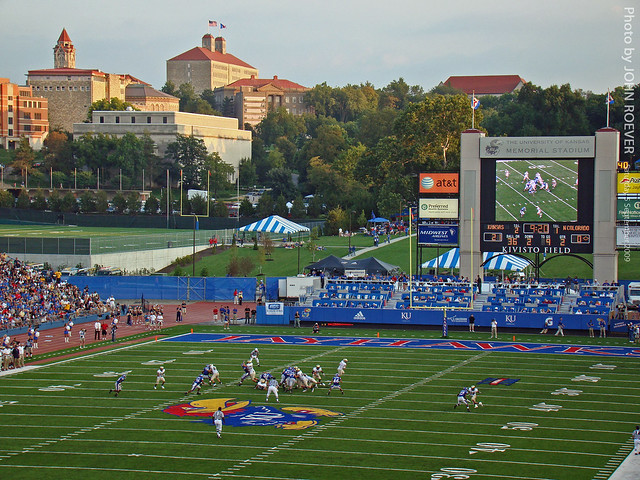
1) For starters, I have only attended one of their games in my lifetime. Attending a game and absorbing the unique experience afforded by a stadium’s atmosphere often generates the passion it takes to develop an irrational emotional attachment for a group of behemoth, freak-of-nature strangers scarcely aware of your existence.

One of my most formative and enduring sports stories involves my late grandfather Roy, who became the paterfamilias for my family’s KU basketball fanhood. On one fateful day, Roy attended his first Jayhawk game in Allen Fieldhouse.  Bud Stallworth rained 50 points down on the hapless Missouri Tigers in a victory that thrilled the capacity 16,300 crowd and instantly transformed my grandfather into a lifelong fan.

So, from that angle, perhaps I never gave the Chiefs a fair shake.  I lacked that seminal, life-altering moment that may have been possible if I ever saw Joe Montano play in person.

2) As a child who spent every waking moment scripting his future career in the NBA, football meant about as much to me as pinochle or mathematics. Football, much to my wife’s disappointment, did not emerge as a hobby for me until long after my hoop dreams were cruelly squelched by inevitability. By the time I decided that waiting nearly eight months for the annual renewal of my vicarious existence was simply too depressing, I threw my passion in the only place that made any sense for me.

Perhaps no better segue exists for the following.

3) The Kansas City Chiefs are not good at football. It’s really difficult to care about a team that sets new records for fruitlessness each year—that is, unless you have never known anything different than cheering for that team. For this reason, and others, I harbor the utmost respect for the noble, longsuffering fans of wretched teams.

My uncle Jared is the stalwart champion of the Chiefs, the Kansas City Royals, and KU football.  Were it not for Kansas basketball, Jared surely—and justifiably—would have committed sports seppuku many moons ago. Loyalty counts for something, though, particularly when it is extended faithfully to the bantha fodder of sports teams.

Fans are not without a sense of ethics, as it turns out, and nearly all of them cast aspersions (and sharp objects) at people who back only the most dominant teams.  The man who dons New England Patriots, Duke Blue Devils, and New York Yankees apparel is assuredly the man who cheats on his wife for a comely woman twenty years his junior, attends Westboro Baptist rallies, and kicks cocker spaniels in his leisure.  The man who wears Cleveland Browns attire in public is the fellow who donates to the Red Cross, helps little old ladies cross the street, and pulled a maimed Lieutenant Dan from a Vietnamese war zone.

4) I could never quite condone embracing Missourians as brothers-in-arms on Sundays, but actively despise them every other day of the week.  The Chiefs fan base is a tension-ridden amalgamation of Kansas State, Missouri, and Kansas fans. Compartmentalizing my college athletics disdain simply was not tenable.  For most, rivalries are central and indispensable to their experience as fans.  My anathema for Missouri and Kansas State was set in place long before football managed to lay its claim to my consciousness, and asking a person to set such a thing aside for the benefit of watching abysmal football strikes one as discordant with nature, ethics, and The Rules of Fandom.

Before I moved to Oklahoma last summer, I foresaw the possibility of adopting the Thunder as an NBA team.  A passing, blithe interest in the Phoenix Suns would be relatively easy to shed for a team that had two Jayhawks on its roster and one of the most likeable players in professional sports.  Luckily, and most importantly, the Thunder galvanized my emotional investment last year when they eliminated the wildly unlikable San Antonio Spurs from the NBA playoffs. Tim Duncan, whose emotional capacity knows its zenith only in the seconds following fouls whistled on him, is rather easy to hate, as is his balding, beak-nosed counterpart (Manu Ginobli), and Tony Parker. I was irrevocably tied to the Thunder bandwagon after watching James Harden deliver dagger after dagger to the most personality-devoid team in sports, thereby exorcising the demons attending me for all the years I watched the Spurs eliminate the Suns. In other words, I needed a foil for my team before that team could be mine.

One of the primary motivations for fanhood, unfortunately, rests in the desire to feel superior to your rivals. Enjoying your own team’s successes simply isn’t enough. To be a true fan, you must also revel in the failures of your rivals.

This morning, when I glimpsed a woman wearing a Kansas State pullover, it conjured images of my fourth grade teacher (who memorably found ways to insert her athletics allegiance into our class at every turn), Western Kansas, and agriculture. The sight also triggered emotional responses, of course. I thoughtlessly unzipped my coat to ensure she could glimpse my 2007 Orange Bowl shirt, a particularly apropos dig on the heels of K-State’s BCS bowl loss to Oregon.  I wanted to shove statistics in her face about the all-time head-to-head record in football and our utter dominance of the Big 12—and, by extension, K-State—in hoops. To the relief of my wife, I managed to suppress these desires, but made certain to bear a smug grin on my face after we paid our bill and strolled past her on the way out of that IHop.

Ultimately, I removed myself from the NFL adoption project.  Sure, I can produce an emotional response for a group of tattooed college kids trying to throw a ball through a net, but doing the same for a group of tattooed adults trying to crush each other’s skulls seemed impossible for reasons other than my preference for a finesse sport over a contact one. The nuts and bolts for true fanship are as follows, and—as I discovered—are nigh impossible to generate during your adulthood:

1) You must have attended a game at your team’s venue.  If you’ve never set foot on the campus at Chapel Hill, you don’t get to be a Tar Heels fan.

2) You must have cheered for at least one bad team—and remained loyal to said team—during your life.

3) You must have rivals that you detest beyond reason.

The absence of any of the above precludes you from being a fan, irrespective of the money you’ve shelled out for the team’s apparel.  Fortunately, other hobbies exist for adult men, though I can’t imagine what they are.